Independent Crew Review

Dear Passengers: Travel Crew – Independent Review Overview

This in-depth, independent review explores Dear Passengers: Travel Crew, a cooperative airline simulation where physics-driven chaos, quick thinking, and shared laughter turn every flight into a dynamic in‑flight story. Our goal is to help you decide whether this unique cabin-and-cockpit adventure is worth boarding.

Cooperative Airline Simulation
Physics-Driven Chaos
Upbeat, Lighthearted Tone
Quick Verdict Best with a full crew

If you enjoy games built around communication, chaos management, and improv comedy, Dear Passengers: Travel Crew is an energetic pick. It shines as a party-style co-op experience but feels more limited when flown purely solo.

Skycrewtrip is an independent review website. We are not affiliated with InfiniteArc Studios, Google Play, or the Dear Passengers: Travel Crew development team.

Quick Verdict: Should You Try It?

Dear Passengers: Travel Crew is a lighthearted cooperative airline game where the fun comes from coordination, improvisation, and chaotic physics rather than strict, technical flight simulation.

Why it works

  • Teamwork-first design: Each player can take a distinct role, from piloting to cabin service, and the systems encourage constant chatter and coordination.
  • Physics-driven comedy: Turbulence, loose luggage, and sliding trays create unscripted, memorable moments that rarely play out the same way twice.
  • Approachable structure: Flights feel like compact missions, ideal for casual sessions or a full evening of “one more route” with friends.

Where it’s less strong

  • Solo limitations: While solo play options exist, the design is clearly tuned for multiple crew members sharing responsibilities.
  • Chaos can be overwhelming: Players seeking a slow, ultra-precise simulator may find the unpredictable physics more silly than satisfying.
  • Communication is essential: Groups that prefer quiet, individual play may struggle; the best sessions are chatty and reactive.

Verdict: Dear Passengers: Travel Crew is worth boarding if you enjoy co-op games that blend mild pressure, quick decisions, and slapstick mishaps. It is less ideal if you only play solo or want a highly realistic airline management sim.

Game Concept: Physics Meets Airline Crew

Dear Passengers: Travel Crew trades dense dashboards for hands-on, physics-driven problem solving. Instead of quietly logging checklists, you are constantly juggling the moving pieces of a live cabin and cockpit.

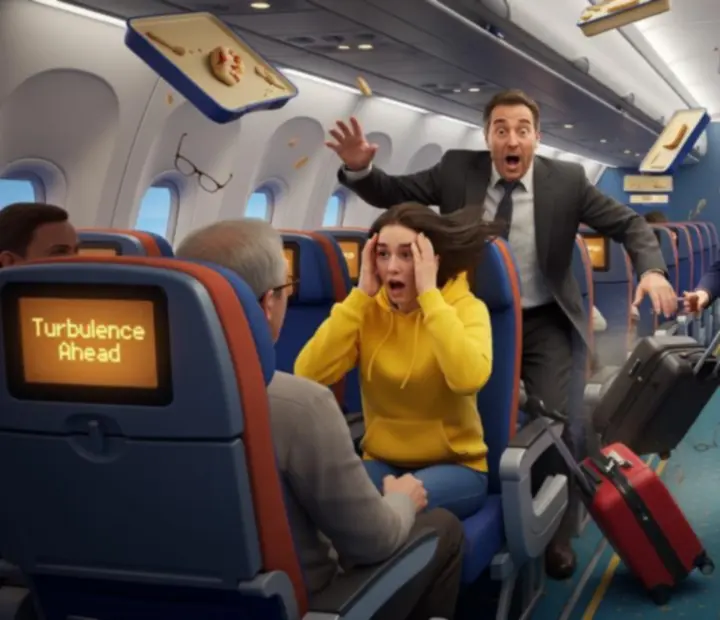
Every run puts you inside an aircraft where turbulence, rolling luggage, and surprised passengers are everyday occurrences. Drinks might slide away mid-service, bags can tumble into aisles, and a sudden bump can scatter carefully stacked items across the cabin.

Rather than focusing purely on simulation accuracy, the game leans into “wrangling order out of quirky chaos”: you and your fellow crew members try to keep things under control long enough to complete a flight, while the physics engine keeps trying to knock everything off balance.

Taking the Pilot’s Chair & Life as Cabin Crew

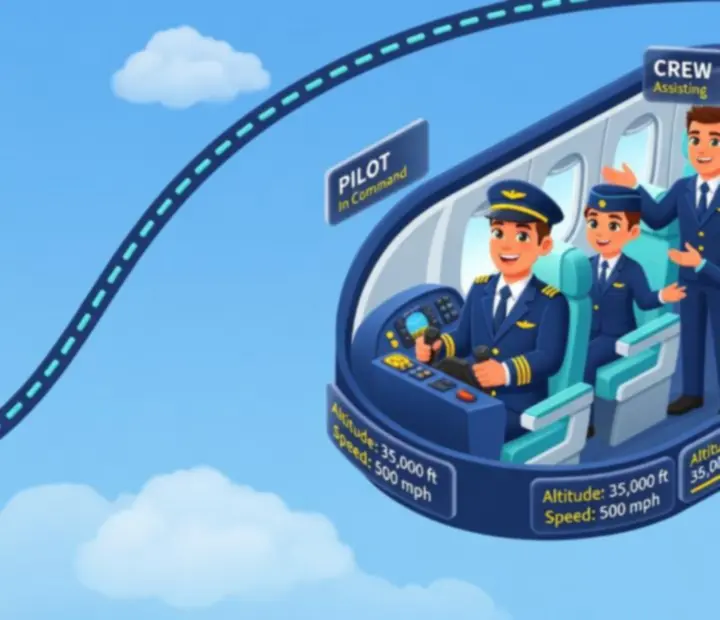
Dear Passengers: Travel Crew treats every seat on the aircraft as part of a connected system. The pilot, cabin crew, passengers, and cargo all influence one another as conditions change.

Pilot cockpit-style view suggesting visibility of skies and cabin indicators

Taking the Pilot’s Chair

Piloting in Dear Passengers: Travel Crew is less about mastering intricate avionics and more about reading the skies and supporting the cabin. You respond to sudden gusts, patchy air, and unexpected events, all of which feed directly into the cabin’s level of turbulence.

You are encouraged to signal the crew when you expect trouble, and to adjust your flying style based on what is happening behind you. If trays are in the aisle or cargo has just been re-stacked, a careful approach can spare everyone from an airborne mess. When emergencies surface, your role becomes the anchor that allows the cabin team to recover.

Because the game is physics-driven, even small course corrections or bumps can ripple through the cabin, making the pilot feel truly connected to the rest of the flight.

Read more about pilot responsibilities

Cabin Crew: Service Under Pressure

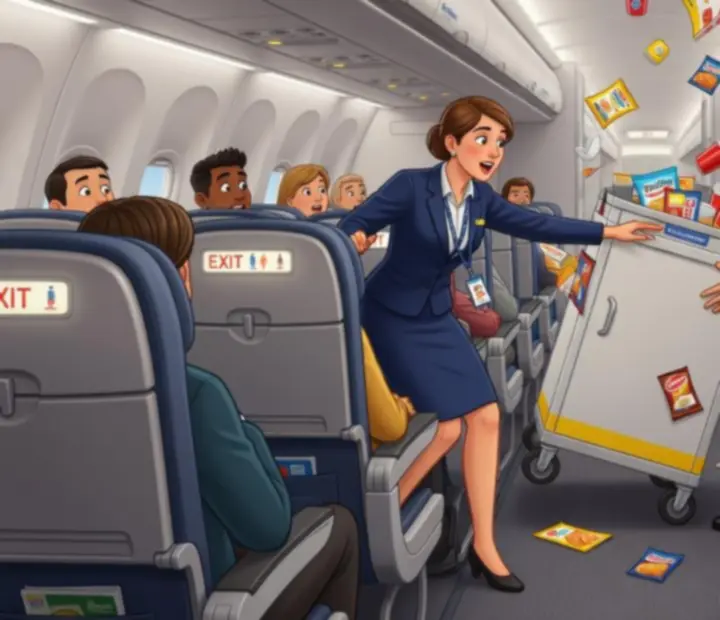
The cabin crew is where the moment-to-moment action lives. As a flight attendant, you juggle:

  • Service duties: delivering snacks and drinks, responding to call buttons, and keeping the aisle clear.
  • Passenger emotions: calming nervous flyers, handling impatience, and guiding everyone through bumps and surprises.
  • Physical hazards: dodging or securing flying objects when turbulence strikes, from rolling trolleys to skidding luggage.

Success comes from timing and role clarity. A well-coordinated cabin team divides tasks—one player might focus on service while another keeps an eye on loose items and safety. Because the game’s physics will happily knock over anything left unsecured, staying a step ahead of the motion is key.

When the pilot calls out an incoming rough patch, a prepared cabin team can lock things down, reassure passengers, and turn what could have been a disaster into a controlled, if still humorous, incident.

Passenger & Cargo Management

In Dear Passengers: Travel Crew, people and objects share the same unpredictable space. Managing both is central to keeping flights smooth enough to reach the destination.

Passengers: Comfort, Requests, and Reactions

Passengers bring the human side of each flight. They have needs, reactions, and expectations that change based on how the crew handles the situation. Responding to call buttons, delivering requested items, and offering reassurance during bumpy patches all feed into how stable the cabin feels.

When turbulence hits or items go flying, passengers may become unsettled or amused depending on how fast the crew responds. Good communication between the pilot and cabin crew—such as warnings about upcoming rough air—helps prepare the cabin and keep tension down.

Managing expectations is as important as delivering items. A well-timed explanation or calm presence can keep a minor incident from spiralling into full-on aisle chaos.

Deep dive: passenger systems

Cargo: Risk-versus-Reward Decisions

Cargo introduces a layer of risk-versus-reward decision-making before and during departure. Items with special value or behaviour can influence how the flight unfolds once the physics system starts nudging everything around.

Players decide how and where to store cargo, balancing convenience with safety. A quickly accessible but poorly secured item might save time during service, yet become a hazard once the aircraft hits a patch of lively air.

The best crews treat cargo not as background decoration but as a set of moving pieces to plan around. Smart placements, early securing, and staying aware of what might rattle loose all contribute to a smoother route.

Read more about cargo strategy

Physics-Driven Antics: The Real Entertainment

The standout feature of Dear Passengers: Travel Crew is its physics system. Instead of scripting every incident, the game allows trays, luggage, trolleys, and other cabin objects to react naturally to motion. This transforms routine tasks into potential slapstick scenes.

A slightly mistimed turn might send a drink cart rolling. A pocket of turbulence could knock an open overhead compartment into the spotlight. When several of these interactions collide, the result feels like an airborne chain reaction that the crew must contain.

Because so many variables are in play at once, the entertainment value comes less from perfect execution and more from how you and your friends recover. Teams that embrace the absurdity—laughing as they scramble to gather stray items and reassure passengers—will get the most out of these moments.

Explore the physics-focused review

Dynamic Weather & Turbulence

Weather in Dear Passengers: Travel Crew is more than a backdrop. Shifting skies and air currents actively reshape how both the cockpit and cabin operate.

For the pilot

Changing wind conditions demand constant adaptation. Sudden bumps or drift can force quick corrections, and the pilot’s ability to anticipate rough pockets can give the cabin crew valuable time to prepare. Gentle handling during service windows can be the difference between a routine snack run and a cabin-wide spill.

For the cabin crew

Weather translates directly into turbulence that reshuffles priorities. A previously safe stack of trays might need immediate attention; passengers who were relaxed moments ago can become anxious. The crew must decide whether to rush a final delivery, secure loose items, or move straight into safety mode.

For the overall experience

Because conditions vary, no two flights feel identical. A relatively calm route lets you focus on efficiency and service, while a choppy one becomes a test of improvisation and resilience. This variability underpins the game’s replay value, especially in co-op sessions where groups learn to adapt together.

Spotlight on Teamwork & Communication

Dear Passengers: Travel Crew is, above all else, a teamwork simulator dressed as an airline game. The systems reward players who talk, coordinate, and adjust on the fly.

Delegation and role division

Strong crews assign clear areas of focus: one player might watch the overhead compartments, another handles food and drink, and a third stays near high-risk passengers. The pilot, meanwhile, times manoeuvres around these cabin rhythms whenever possible.

This structure doesn’t feel rigid; instead, it gives teams a baseline plan they can rapidly break and reform when chaos hits.

Calling out problems and hazards

Because objects and passengers can change state quickly, real-time communication is critical. Alerts about a sliding cart, a worried passenger, or a piece of cargo that has loosened can prevent small issues from cascading into full-cabin incidents.

Much of the humour comes from these surprise moments: “Brace for a bump,” “The trolley’s loose,” or “Row 3 needs help now!”

Improvisation under pressure

Even with strong planning, flights will rarely unfold exactly as expected. The best moments in the game come from creative improvisation: players temporarily swapping roles, abandoning a plan to rescue a situation, or coordinating quick, synchronized actions to restore order.

When the crew recovers from near-calamity together, the result feels like a shared story you will retell long after landing.

Co-op, Solo Play, and Replay Value

Dear Passengers: Travel Crew is clearly tuned for group play, yet it can still be approached solo if you are primarily curious about its systems and style.

Best as a co-op experience

With multiple players, the game’s physics, passengers, and cargo systems interlock into a rich co-op puzzle. Each new flight becomes a fresh scenario where different crew combinations try new approaches, from ultra-disciplined planning to free-form chaos containment.

This is where replay value shines. Different groups, or even the same group on different days, will naturally experiment with alternative task splits, priorities, and in-jokes, leading to flights that feel distinct even when revisiting familiar routes.

Expectations for solo players

Solo options exist, but the experience takes on a different flavour. Without teammates to bounce off of, the fun leans more toward personal challenge—trying to stay ahead of the physics and cabin needs. That said, much of the emergent humour comes from shared reactions, so players who only enjoy solo modes may find the game less compelling over time.

If you do choose to fly alone, it helps to embrace shorter sessions and treat each flight as a quick scenario to test your multitasking and risk management skills.

Replay value over the long haul

Because conditions, passenger behaviour, and physics interactions vary, no two flights behave exactly the same way. Groups that enjoy party-style games and emergent storytelling can easily turn Dear Passengers: Travel Crew into a recurring co-op favourite, especially when rotating roles across sessions.

Fans of strict score chasing might find the structure looser than they prefer, but players who measure success in laughs and memorable mishaps will likely find plenty to return for.

Controls, Pacing & Visual Style

Dear Passengers: Travel Crew aims for a middle ground where controls are approachable but still demand attention. You are rarely wrestling with dense menus; instead, the challenge lies in executing straightforward actions at the right time while the environment keeps shifting.

The pacing is deliberately hectic. Calm stretches exist, but they usually serve as brief planning windows before the next wave of turbulence, requests, or cargo surprises arrives. Groups accustomed to high-energy party games will feel right at home, while players who prefer very slow-paced sims should be ready for a busier rhythm.

Visually, the game leans into a clear, travel-inspired aesthetic. Cabin elements, interface prompts, and indicators echo boarding passes, route diagrams, and cabin signage, making key information easy to parse even when conditions get messy.

The mix of bold colours and playful cabin details suits the game’s tone: serious enough to sell the idea of running a flight, but cheerful enough to keep the mood light when something inevitably goes sideways.

Strengths, Drawbacks, and Who Will Love It

Dear Passengers: Travel Crew is a distinctive entry in the broader simulation space, leaning hard into co-op play and comedic physics. Here is how it stacks up.

Strengths

  • Physics-driven fun: The cabin is a lively stage where objects and passengers react dynamically, creating memorable scenes.
  • Co-op improvisation: The design nudges players toward creative fixes and shared problem solving rather than strict, scripted solutions.
  • Approachable look and feel: Friendly visuals and clear cues reduce friction for newcomers.
  • High story potential: Flights often end with “remember when…” stories that encourage repeat sessions with the same crew.

Drawbacks

  • Solo appeal is limited: Without partners to coordinate and laugh with, some of the charm is inevitably lost.
  • Requires active communication: Quiet groups or players who prefer independent play styles may find it harder to click with the design.
  • Not a hardcore sim: Those seeking precise airline management or ultra-realistic cockpit procedures may find the focus on comedy and chaos too loose.

Who will enjoy it most?

Dear Passengers: Travel Crew is a strong fit if you:

  • Like party games and co-op experiences built around shared laughter.
  • Enjoy group simulations where each player takes on a distinct role.
  • Have friends or family who appreciate creative problem solving under light pressure.

It is less ideal if you usually play solo, prefer hyper-serious cockpit procedure simulations, or dislike games where unpredictability is part of the core appeal.

Frequently Asked Questions

This FAQ covers the most common questions about how Dear Passengers: Travel Crew feels to play, how chaotic flights can get, and what kind of preparation helps.

What makes this different from traditional flight simulators?

Traditional flight simulators typically focus on accurate aircraft systems and procedures. Dear Passengers: Travel Crew instead focuses on the lived experience of running a flight as a team. Physics-driven cabin events, passenger reactions, and cargo surprises are central to the gameplay, and success depends on communication and improvisation rather than procedural checklists alone.

How replayable is Dear Passengers: Travel Crew?

The game’s replay value comes from variable conditions and emergent interactions. Different turbulence patterns, changing cabin situations, and the choices your crew makes around cargo and role division all contribute to flights that feel distinct, especially when played with a rotating set of friends or family members.

How chaotic can flights get?

Flights can swing from calm to delightfully chaotic very quickly. A few mistimed moves, a patch of rough air, or an unsecured item can snowball into a cabin full of moving parts and flustered passengers. The design encourages you to lean into this chaos, turning recovery efforts into a central part of the fun rather than a punishment.

Who should consider trying the game?

You will likely enjoy Dear Passengers: Travel Crew if you appreciate co-op games, party-style chaos, and creative teamwork. It is a good match for students, professionals, and casual players looking for an accessible, humorous experience that still rewards coordination and planning.

What kind of preparation helps before each flight?

Before takeoff, it helps to assign roles, plan basic responsibilities, and quickly review cargo and cabin layout. Agreeing on who will respond to passenger needs, who watches for loose items, and how the pilot will signal incoming turbulence sets your crew up for smoother, more enjoyable runs.

For a structured approach, explore our dedicated sections on flight preparation, cargo decisions, and crew roles.

Final Recommendation: Is Dear Passengers: Travel Crew Worth Boarding?

Recommended for co-op crews

Dear Passengers: Travel Crew succeeds as a physics-driven cooperative airline experience where the real joy comes from coordination, quick thinking, and shared laughter. It is less about perfect flying and more about steering a team through a constantly shifting cabin full of passengers and cargo.

If you primarily play with friends or family and enjoy games where communication is the main skill, this is a strong recommendation. If you only fly solo or are looking for a highly technical, realistic flight simulator, you should approach with more measured expectations.

Framed as a group adventure—part airline operation, part party game—Dear Passengers: Travel Crew delivers a memorable, lighthearted trip that fits well into an evening of co-op gaming.

This site is an independent editorial review hosted at skycrewtrip.com. It is not an official property of InfiniteArc Studios or Google Play.